
How to Evaluate Enterprise AI Agencies: 8 Questions That Separate Delivery from Theater
By Velocity AI · May 27, 2026 · 7 min read
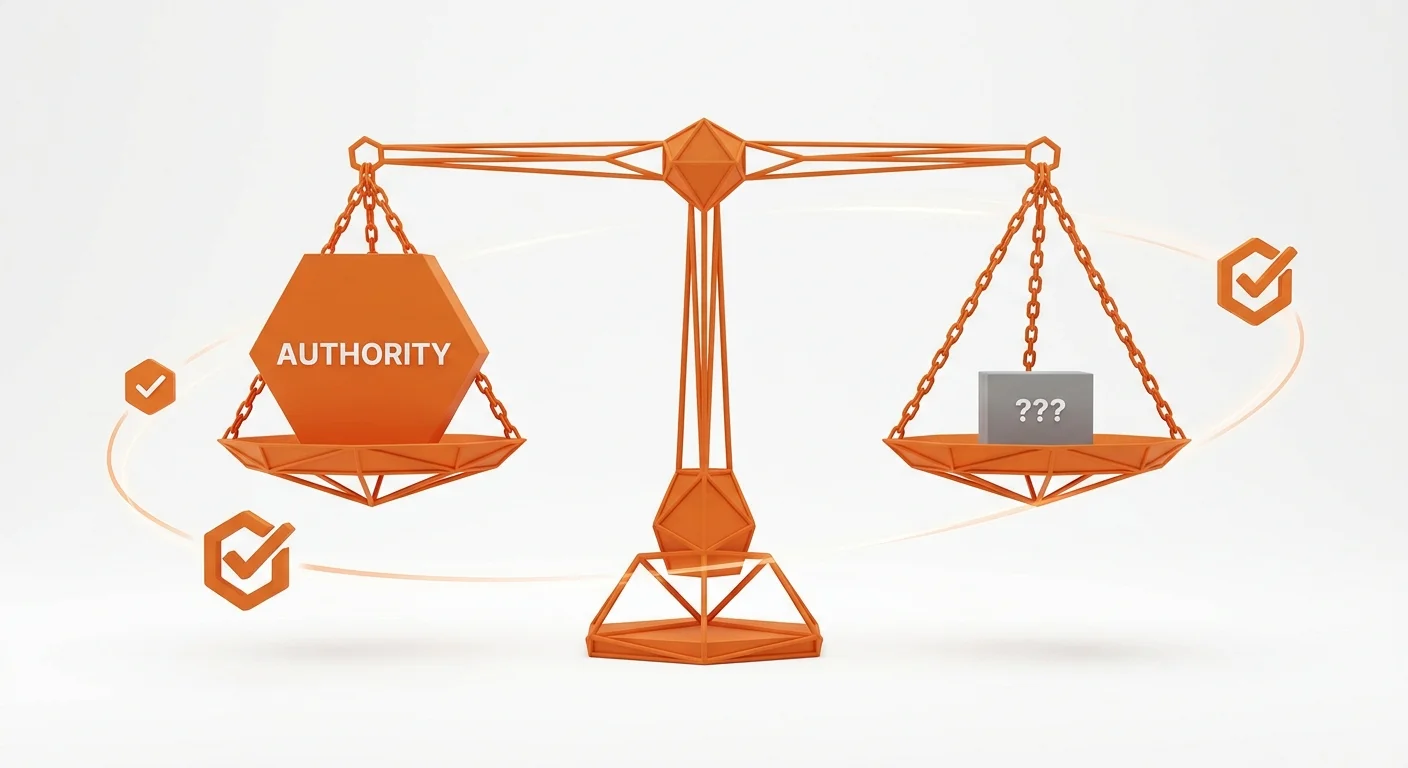
Most enterprise AI agencies look identical on paper. These 8 questions expose whether a vendor can actually ship production AI — or just run pilots and invoice.
Most enterprise AI agencies look identical on paper. Every firm claims Fortune 500 experience, end-to-end delivery, and a proven methodology. Most of them have a slide deck and a handful of pilots. A minority has actual production deployments in regulated environments with measurable business outcomes. These eight questions separate the two groups.
The stakes are higher than they appear. A wrong agency selection doesn't just waste the pilot budget — it consumes 12 to 18 months of organizational attention, creates internal skepticism toward AI that makes the next initiative harder to fund, and leaves you further behind competitors who chose correctly the first time. Gartner's AI vendor evaluation framework and Forrester's enterprise AI research both identify vendor selection as the single most consequential early decision in an AI program.
Question 1: Can you show me production deployments — not proofs of concept?
Why it matters: The gap between a pilot and a production AI system is enormous. A pilot runs on clean data in a controlled environment with a motivated team and no real users. A production system handles edge cases, integrates with legacy infrastructure, operates under governance policies, and gets used by people who didn't choose to use it.
What a strong answer looks like: The agency names specific clients, describes the business process that was automated or augmented, quantifies the outcome, and can describe the technical architecture. If they deflect with NDAs on every example, that is a signal — legitimate agencies have at least a few referenceable production deployments.
What a weak answer looks like: "We've run dozens of successful pilots" with no mention of what happened after the pilot. Pilots that don't reach production are not a track record.
Question 2: Who writes the production code — your team or ours?
Why it matters: Many consulting firms build a strategy, create a proof of concept, and then hand off to the client's internal engineering team to build the actual system. If your internal team could build it, you wouldn't need an agency. This handoff model produces roadmaps that collect dust.
What a strong answer looks like: The agency has its own engineering team that builds and deploys production systems. They describe their deployment process, their CI/CD practices, and how they handle production monitoring after go-live.
What a weak answer looks like: The answer involves phrases like "we co-develop with your team" or "we guide your engineers through the implementation." Translation: your team builds it.
Question 3: What happens when the model underperforms in production?
Why it matters: Every AI system underperforms in production in ways that weren't visible during testing. The question is not whether it will happen — it will — but whether the agency has a structured process for detecting, diagnosing, and fixing it.
What a strong answer looks like: The agency describes their monitoring setup, how they define acceptable performance thresholds, what their escalation process looks like, and a specific example of a production issue they resolved. They have an answer because they've been in production.
What a weak answer looks like: A vague answer about "continuous improvement" and "model retraining" with no specifics about how degradation is detected or what the SLA looks like.
Question 4: How do you handle data that lives across 15 different systems?
Why it matters: Most enterprises don't have clean, centralized data. AI systems that work beautifully on curated demo data fail when they encounter the actual fragmented data landscape of a large organization. The agency's data engineering capability is often more important than their model selection.
What a strong answer looks like: The agency describes their data discovery process, how they handle schema conflicts and data quality issues, and how they build data pipelines that can be maintained after the engagement. They've solved this problem before and have a playbook.
What a weak answer looks like: The agency focuses the conversation on model capabilities and assumes data access as a given. If they haven't asked about your data landscape in the first conversation, they are not ready for your environment.
Question 5: What is your governance and compliance framework?
Why it matters: Deploying AI without governance is borrowing against future risk. In regulated industries, an AI deployment that lacks audit logging, access controls, and output monitoring is a compliance exposure. Even in unregulated industries, ungoverned AI creates reputational and operational risk.
What a strong answer looks like: The agency has a standard governance deliverable — a document that specifies what the AI can and cannot do, how outputs are monitored, what the escalation path is for problematic outputs, and how access is controlled. They've deployed this in your regulatory environment before.
What a weak answer looks like: Governance is framed as a client responsibility or described as a "later phase" after the pilot proves value. Governance retrofitted after deployment is governance that doesn't get done.
Question 6: Are you platform-agnostic or do you have a preferred vendor?
Why it matters: Many agencies that present as neutral have referral agreements or partnership tiers with one or two cloud providers that pay them for customer introductions. Their "recommendation" is influenced by commission, not by what's right for your environment.
What a strong answer looks like: The agency has production deployments on Azure, AWS, and Google Cloud. They describe the specific criteria they use to choose a platform for a given client — compliance requirements, existing infrastructure, cost profile, model availability — not a default recommendation.
What a weak answer looks like: Every conversation leads back to one cloud provider, or the agency has "preferred partner" status with a single vendor prominently featured in their pitch.
Question 7: What does your engagement model look like after go-live?
Why it matters: AI systems are not static software. Models degrade as the world changes, edge cases accumulate, and business requirements evolve. The agency that deploys your system and disappears is not a partner — they are a contractor.
What a strong answer looks like: The agency offers a defined post-launch model: monitoring, performance review cadence, retraining schedule, and a clear handoff process if you eventually bring maintenance in-house. They describe this as a standard part of the engagement, not a premium add-on.
What a weak answer looks like: Post-launch is a "future conversation" or an optional retainer with no defined scope. The engagement effectively ends at deployment.
Question 8: What has gone wrong on a past engagement, and how did you handle it?
Why it matters: Every AI project encounters problems. A vendor who presents only successes is either not telling the truth or hasn't done enough projects to have experienced failure. How an agency responds to problems reveals more about their character than how they respond to smooth execution.
What a strong answer looks like: The agency describes a specific problem — a timeline slip, a model performance issue, an integration that took longer than expected — and describes exactly how they handled it: what they communicated, what they changed, and what the outcome was. They own the narrative without defensiveness.
What a weak answer looks like: The agency struggles to identify a challenge or frames all challenges as client-side issues. This is a signal about accountability culture.
Applying This Framework
Run these eight questions in your next AI agency evaluation. Score each vendor: strong answer, acceptable answer, weak or absent answer. Weight questions 1, 2, and 5 most heavily — production deployment track record, who actually builds the system, and governance capability are the three highest-risk areas where agency weakness most commonly surfaces in production.
An agency that can answer all eight questions with specificity and evidence is ready to be a production AI partner. An agency that struggles with more than two of them is not — regardless of how impressive the demo looks.
Velocity AI's track record includes production AI deployments at AT&T, Kia North America, and Edward Jones, among others — all built and deployed by our own engineering team, with defined governance frameworks and measurable outcomes. Our enterprise AI agency page provides a detailed comparison of our delivery model against the major alternatives. For independent context on what separates leading AI implementers from the rest, McKinsey's research on AI high performers is one of the most comprehensive annual benchmarks available.
Get the weekly AI brief for enterprise leaders
Strategy, deployment patterns, and what's actually working in enterprise AI — no fluff.
Frequently Asked Questions
What separates the best enterprise AI agencies from consulting firms that run pilots?
How do I know if an enterprise AI agency can handle our compliance and security requirements?
What AI platforms should an enterprise AI agency support?
Related Insights
Reading Between the Models: Why Your Brand Visibility Varies Across AI Assistants
8 min read · Aug 24, 2026
Read more
Which LLM Cites Whom: Model-by-Model Citation Analysis for Enterprise Brands
8 min read · Aug 17, 2026
Read more
Top 8 Enterprise AI Agencies for Fortune 500 Companies in 2026
10 min read · Jun 3, 2026
Read more